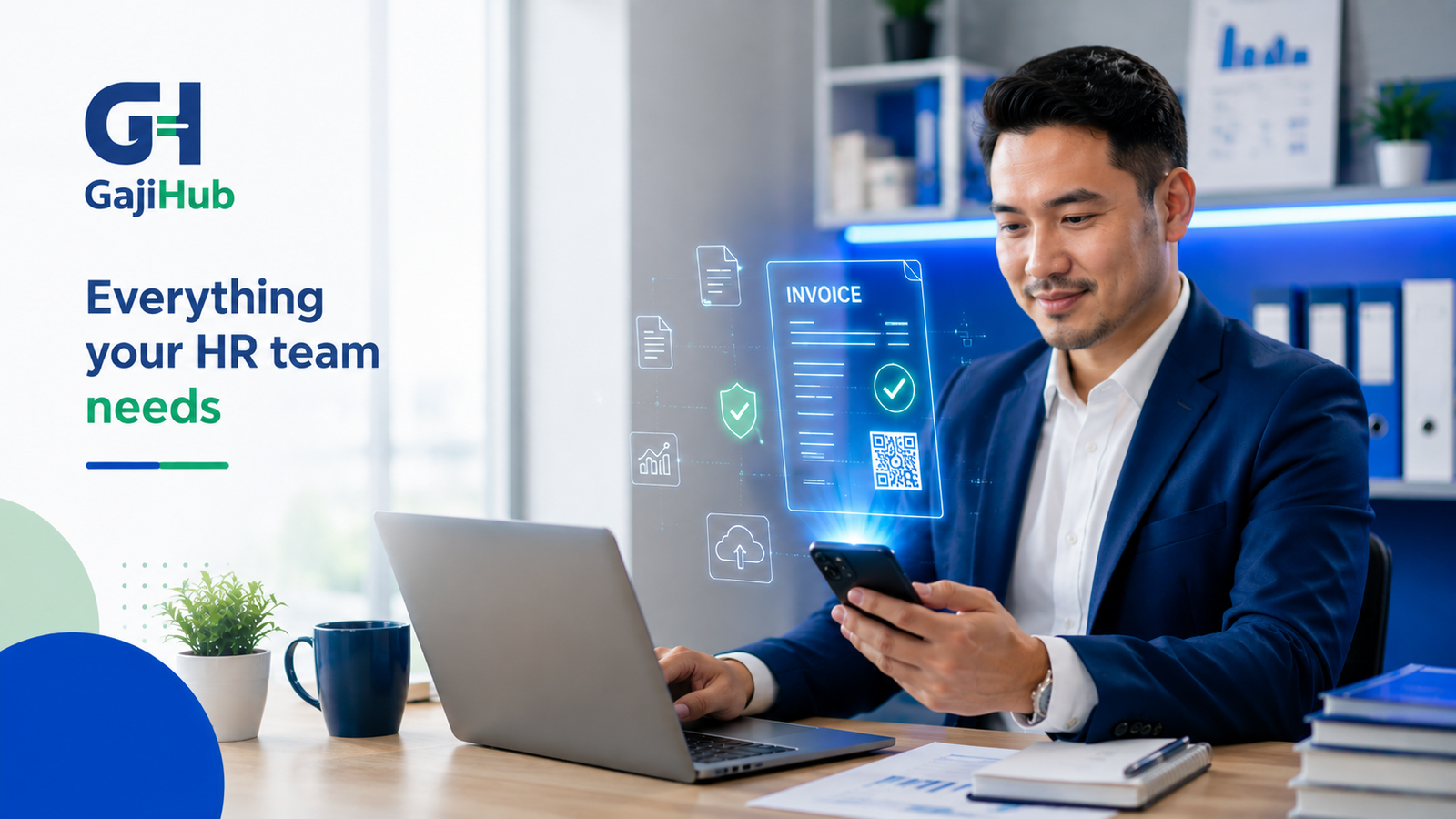
Malaysia's tax authority, LHDN (Lembaga Hasil Dalam Negeri), is rolling out mandatory e-Invoicing in phases. While e-Invoicing is led by finance teams, it touches HR and payroll more than many employers expect — from expense claims to certain payments to individuals. Here is a clear, practical guide.
What is e-Invoicing?
An e-Invoice is a digitally validated invoice exchanged through LHDN's MyInvois system. Instead of issuing a PDF or paper invoice, businesses submit invoice data to LHDN for near real-time validation, and a validated e-Invoice (with a unique identifier and QR code) is returned. The goal is a more transparent, automated tax ecosystem.
The phased rollout
Implementation is staggered by annual turnover, starting with the largest businesses and expanding to progressively smaller ones over 2024–2026. Micro and small businesses are among the last groups to be brought in.
Phase dates and turnover thresholds have been adjusted over time, and grace periods have applied. Confirm your business's specific phase and deadline with LHDN or your tax agent.
Why HR and payroll teams should care
e-Invoicing is not only about sales invoices. It can affect areas HR and payroll handle, such as:
- Expense claims and reimbursements — employees may need to provide valid e-Invoices to support claims.
- Self-billed e-Invoices — required in certain situations, such as payments to some individuals or foreign suppliers.
- Benefits and perquisites — documentation needs to align with tax records.
- Vendor and contractor payments processed alongside payroll.
What you need to get started
- Your business's Tax Identification Number (TIN) and registration details.
- Access to MyInvois — via the LHDN portal for low volumes, or an API integration for high volumes.
- Clean master data: customer, supplier, and employee TINs where required.
A readiness checklist
- Confirm your phase deadline with LHDN.
- Map every process that issues or receives invoices, including expense claims.
- Decide between the MyInvois portal and an API/middleware integration.
- Update your expense-claim policy so staff know what documentation to submit.
- Train finance, HR, and managers who approve claims and payments.
Disclaimer: This article is general information current as at 2026 and is not legal or tax advice. e-Invoicing timelines and rules change. Always verify the current requirements with LHDN or a licensed tax agent before acting.
How GajiHub helps
GajiHub keeps your payroll, claims, and employee records organised and exportable, so when an e-Invoice or supporting document is needed for a reimbursement or payment, the underlying data is accurate and easy to retrieve.